Selling Your Brand

Standard

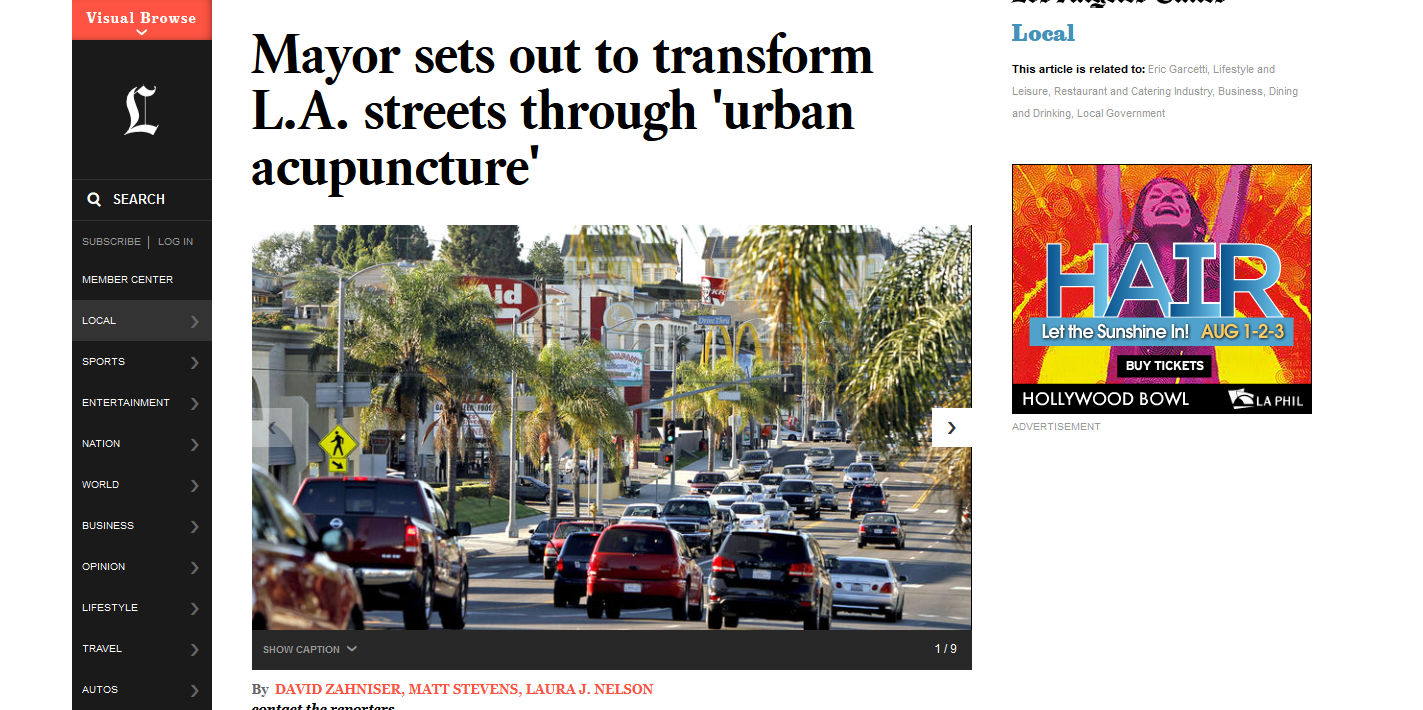
Blog post 6 imageOn this morning’s highly rated KTLA-TV newscast, the anchors spent a couple of minutes ridiculing the term Mayor Eric Garcetti used for his “Great Streets” program. He called it “urban acupuncture,” and that became the headline in the LA Times, rather than the “Great Streets” brand. Unfortunately for the mayor, the news anchors seemed to spend more time ridiculing the name than explaining the plan.

Successfully naming, or “branding,” a program is one of the biggest communications challenges. Be too creative and no one will understand it or, worse, they’ll ridicule it. If you’re not creative enough, the name won’t be memorable. How do you find the brand that is just right? And once you’ve established the brand, how do you make sure it gets used?

The issue here is that the mayor may have undermined his own brand by using a more creative term than the “Great Streets” brand. Developing messaging to ensure the brand is used successfully is essential. Too often, we see an individual’s random comments transformed into headlines that make them cringe. Or even worse, undermine their very efforts.

Messaging and sticking to that messaging helps avoid these headlines. Asking yourself if you would want to see those words or that description in print or as the sole soundbite on the TV news will help avoid headlines that make you cringe.

Before any interview with the media, sitting down in a quiet place, thinking about what will be said and how it will appear to the people you wish to reach and only then writing down what you would like the headline to be will be very helpful in producing the headline and the content you want.

No doubt, the mayor and/or his staff had done all of this. He has a first-rate communications team, and he is a skilled communicator. Ridicule on the Sunday morning KTLA-TV newscast is seen by a very small audience because so few people watch TV news on the weekend mornings.

We look forward to seeing if the mayor and his team choose to stick with “urban acupuncture” or not.

Acupuncture, once ridiculed as medical hucksterism, has gained respectability as it’s been shown to be extremely effective with certain conditions. The notion that a targeted urban renewal program could perform as acupuncture does and send healing throughout the “body” of the City of Los Angeles is an intriguing one. As the Sunday morning newscast shows, this creative term for an old-fashioned urban renewal program will have to get past the news media’s filters to become a meaningful description for “Great Streets.”
It’s Alive!

Image

A new infographic from Burrelles Luce, the media monitoring service, shows newspapers aren’t dead yet. Circulation in the nation’s top 25 newspapers has grown an average of 25% over the last five years.

More than half of Americans are still reading their newspapers in print, and some of the country’s savviest investors are buying newspapers. So, the argument goes, if Warren Buffett and Jeff Bezos think print is a good investment, it must be a thriving industry.

Not sure we fully agree. While newspapers have created web presences, most still haven’t figured out how to make money online. And many of their Internet offerings leave a lot to be desired in terms of the users’ experience.

Still, we believe newspapers remain an important part of most communications efforts. Content is king as they say. And newspapers still have more staff and greater skills to produce written content than anyone else. Opinion leaders still read them. Their online content gets recirculated through emails, texts, social media and more. And so many of the other outlets – from television to bloggers – look to newspapers for story ideas and content for commentary.


Breathe Free MB on KNBC

Standard

Mayor Howorth speaks at the Breathe Free MB campaign kickoff event

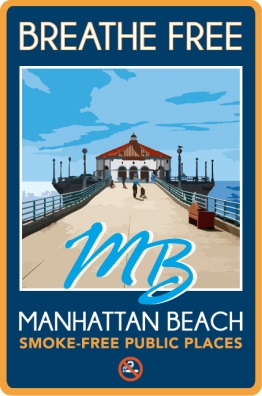
We wanted to be sure you saw KNBC-TV’s report on Breathe Free MB, the public education campaign we’ve put together for Manhattan Beach to explain the city’s new Smoke-Free Public Places ordinance.

In this report, you can see some of the signage we’ve developed with our graphics partner, Robin Weisz, to educate the public about the sweeping smoking law that went into effect July 18. The City has delayed enforcement until Aug. 18 to give the public time to become knowledgeable about the new law.

To ensure the public is informed, the City engaged us to create a public education campaign. We created the campaign identity, strategy and various tools for communicating with the public on an ongoing basis because Manhattan Beach attracts so many tourists and visitors from throughout Southern California who would have no reason to pay attention to the City’s smoking ordinance prior to their visit to Manhattan Beach.

So we created a kickoff campaign starting today that will educate residents, local employees and others currently in the City. We also created signage and other communications tools that will continue to be visible in the City to ensure we reach newcomers to the community with the message that smoking is not permitted in public places. The goal of the education campaign is to make the ordinance self-enforcing so that the City’s valuable law enforcement resources can continue to focus on other priorities.

Please Help – for Your Health and the Health of the Community

Standard

Breathe Free MB Logo for Blog 4

We need your help on Tuesday, July 22, in downtown Manhattan Beach. We are working with the City of Manhattan Beach on “Breathe Free MB,” a public education campaign about the City’s new Smoke-Free Public Places ordinance.

We are seeking volunteers to help distribute materials to Manhattan Beach businesses. If you could spare 90 minutes to support this great cause, please arrive around 10:45 a.m. the plaza by the Farmers Market at the corner of 13th Street and Morningside Drive (adjacent to Metlox, where the fountain is located.) We will have an 11 a.m. kickoff event featuring Mayor Amy Howorth and organizations that support the ordinance.

We’ll then give you maps for where you need to walk and materials to provide the businesses. Altogether, it should take about 90 minutes. You’ll get some exercise and help out a worthy cause, reducing the risk of second-hand smoke and ocean pollution from cigarette debris carelessly discarded by smokers.

The new smoking ordinance goes into effect on July 18th. The City is delaying enforcement of the ordinance until August 18th to give the public time to become familiar with the new law. Breathe Free MB is the program to educate the public.


Conservative Storytelling

Standard

As we like to say, storytelling moves audiences. They connect emotionally to stories, and they remember stories. Jonah Goldberg, a LA Times op-ed writer and a conservative, in his column today, writes about the importance of storytelling to political ideology. He says conservatives don’t do a great job of storytelling – but liberals can’t sell their stories in the popular media because they’re not stories that are widely shared.

Whether you agree with his point of view, he has a point. Audiences want compelling stories. They want to feel good. They want to feel proud, or they want to feel moved.

As Jonah notes, a movie that jokes about abortion (“Obvious Child”) isn’t going to gain a big audience, while one about an unintended pregnancy that is carried to term will (“Juno,” “Knocked Up” and many television series). This, of course, illustrates Americans’ overall view about abortion. A majority of Americans may be pro-choice, but that doesn’t mean they are pro-abortion. Most view abortion as a choice they’d rather not have to make.

While there are many points with which we disagree, we do agree with Jonah’s assessment regarding the importance of storytelling. As he notes in a 2013 column:

For roughly 99.9% of human history, nearly all of human wisdom was passed on in stories. We are a species that understands things — i.e. morality, politics, even religion — in terms of stories. And yet so much of what passes for conservative rhetoric these days isn’t storytelling but exhortation. Whatever the optimal policy might be, if you can’t talk to people in human terms they can relate to, you can’t sell any policy. The war on poverty, for instance, has been an enormous failure in many policy terms, but it stays alive because of the stories liberals tell.

Many liberals will, of course, disagree with his description of the war on poverty. Putting aside his clearly partisan slant here, the underlying message is the same no matter the ideology: Politicians need to master the art of storytelling to convince their audiences to support them and their points of view.

Congratulations WilmerHale

Standard

We’re proud of all our clients, and especially pleased when they get the recognition they deserve. Law360, one of the leading national legal news sites, conducted a survey and found WilmerHale, one of the nation’s pre-eminent law firms, is the “most-favored” IP group by corporate counsel. WilmerHale specializes in intellectual property litigation and represents some of the top firms in the world. Congratulations to all the hard-working attorneys at WilmerHale for this well-deserved recognition.

Location, Location, Location

Standard


This is the successful real estate investor’s mantra, and it also applies in many successful communications campaigns.

We were in Oklahoma when the U.S. Supreme Court issued its ruling in support of Hobby Lobby’s policy denying health insurance coverage for certain types of contraceptives on religious grounds. The response here – in the “buckle of the Bible belt” – is much different than the reaction in California.

The local paper, the Daily Oklahoman, headlined the story as a “win” for Oklahoma City-based retailer. It also editorialized in favor of the ruling and reported on others who were in court seeking the same exemption. People are still shopping in the Hobby Lobby stores and, while there has been some vocal opposition, it seems somewhat muted.

No doubt, some customers will choose to shop elsewhere. But the company’s stores are located in the Midwest and the South, home to millions of conservative Christians and Catholics, who likely will choose Hobby Lobby over Michael’s or other similar retailers because of the company’s stance.

The bottom line: Location can make a difference in your message. One of the first aspects of a good communications plans is defining your audiences, and audiences’ values and priorities can change from one part of the country or the world to the next.

As evidence look to today’s story about New Jersey Gov. Chris Christie’s decision to remain mum on the Hobby Lobby ruling. His presidential aspirations preclude a statement in opposition to the decision because he needs to win votes in the Bible Belt. Speaking up in support of the decision could cost him votes among women and would place him at odds with more moderate Republicans, independents and Democrats in places like California.

As our friend, reporter Mark Barabak, notes in his report, staying mum will be a challenge with reporters and partisans on both sides looking to Christie to take a position on this hot-button issue. But in today’s 24/7 news cycle, hot-button issues can fade, and Christie may get a pass as voters’ focuses turn to other pressing matters.

Footnote: The media always gets a bad rap for its coverage of religion. But this time around, it’s getting some favorable reviews for getting this story right. Bobby Ross Jr., a blogger who writes about the media’s coverage of religion, filed this post saying most of the mainstream media got it right. Of course, the blogosphere is a different story.